Some months, your phone can’t stop ringing, but other times, your referrals slow down, leads start to feel unpredictable, and nearby shops suddenly are all over social media.
That’s why you’re also thinking about enhancing your automotive marketing strategies. You want the right system to help your shop stay visible and keep more opportunities from slipping through your fingers.
So, let’s get into some strategies that shops are using to keep their schedules full and stay busy.
TL;DR: Top Automotive Marketing Strategies
If the goal is more booked jobs and steadier lead flow, focus on:
- Local SEO and Google Business Profile optimization
- Google Ads and Meta campaigns
- Social media and short-form video
- Content marketing and blogging
- Email and SMS follow-ups
- Reviews and referral systems
- Partnerships and local sponsorships
We'll break down each strategy in more detail below, including where it works, when it makes sense, and how shops are using it to bring in more booked work.
What Makes Automotive Marketing Different?
Customers in the automotive industry behave differently, which affects how marketing strategies function. Some people make faster decisions, like when they need urgent repair, while others take weeks or even months to do research and compare before they are ready to book or buy.
The automotive industry also covers a very wide range of businesses that serve different goals. This includes dealerships, repair shops, detailing businesses, PPF, and ceramic coating installers.
If you own a dealership, you need to focus on moving inventory, but as a detailing or protection shop owner, your focus shifts to building trust and justifying higher-ticket services.
Marketing strategies for the automotive industry often use the same channels but in very different ways. The strategy behind Google, paid ads, social media, or email usually depends on customer intent, service type, and how people make decisions.
Why Automotive Marketing Strategies Matter Right Now
Inconsistent lead flow, more local competition, and slow months that seem to show up out of nowhere. Most automotive businesses deal with some version of this.
The shops that stay busy year-round usually do not rely on luck. They have a system behind how customers find them, research them, and decide to reach out.
Here’s why strategy matters now:
- Customers research shops before making contact: People do not just find a shop and book anymore. Google found that 95% of car buyers source information online during the buying process. For a ceramic coating or PPF shop, someone might find you on Google, watch install videos on YouTube, scroll TikTok before-and-afters, or check Reddit before filling out a quote form.
- Rising ad costs create more pressure to generate results: Many shops already feel this. The same budget that worked a year ago may not stretch as far today. As costs rise, strategy becomes more important because you cannot afford to throw money at campaigns and hope something sticks.
- Slow seasons expose inconsistent lead flow: A packed spring schedule does not always carry into slower months. Shops that operate with a good marketing strategy usually have multiple ways to bring in leads, even in those slow periods, instead of relying only on referrals or seasonal demand.
- Margins tighten quickly: Business expenses tend to add up quickly. You have to take care of payroll, shop overhead, products, and ad spend from the same budget. A clear strategy helps you prioritize where marketing dollars should go, instead of spreading budget across channels that do not fit your goals.
Best Automotive Marketing Strategies
People are already searching for automotive services every day. "Auto detailing" alone gets over 59,000 searches a month (according to keyword research on Semrush), and that does not include PPF, ceramic coating, tint, or local searches.
The challenge is ensuring your shop shows up in the right places and stays visible throughout the buying process.
That is why most shops use a mix of channels. Some help people find you, while others help build trust and bring customers back.
Here are some of the best automotive marketing strategies:
Local SEO and Google Business Profile
This is usually where the process starts. Someone searches "ceramic coating near me" or "auto detailing [city]" because they are already looking for a service.
From there, they start checking your photos, reviews, business details, and location pages, which helps them decide if your shop feels worth contacting.
Google Business Profile is often one of the first places people go to learn more about your shop and decide if they trust you. This is why many shop owners spend time improving local visibility by using a local SEO guide for auto detailing business owners.
Best for: Shops looking for stronger local visibility, more inquiries, and steady lead flow.
Paid Ads on Google and Meta
Shops usually look at paid ads when referrals slow down, or there are open spots on the schedule that need filling.
Google Ads puts your shop in front of people who are already searching for related terms.
Meta works a little differently; it helps you stay in front of people who visited your website, watched your videos, or interacted with your content but haven't reached out yet.
Paid ads also tend to work well when you need leads quickly, while SEO usually becomes more valuable over time.
Best for: Shops looking for faster lead flow, promotions, and filling booking gaps.
Social Media and Short-Form Video
The shops seeing the most traction on social media usually make it easy for people to see their work.
People want proof before reaching out, especially for PPF, tint, ceramic coating, and paint correction. They want to see the process, the results, and maybe even a customer reaction or two.
This is usually the type of content getting attention:
- Before-and-afters
- Install videos
- Satisfying reveals
- Customer reactions
The big thing is consistency. Posting for one week and disappearing for the next usually does not do much. Social is often where people first find you. Reviews, Google, and your website help move them closer to booking.
Best for: Shops looking to build awareness, stay visible locally, and keep bringing new people into the pipeline.
Content Marketing and Blogging
People usually have questions before booking high-ticket services. Things like "How long does ceramic coating last?" or "Is PPF worth it?" often get searched before someone ever reaches out.
Investing in service pages, location pages, and helpful content gives you more chances to show up during that process. And unlike ads, a blog post written today can still bring in traffic and leads months later.
Best for: Shops looking to build long-term visibility, support SEO efforts, and bring in steady search traffic.
Email and SMS Campaigns
A lot can happen after someone visits your website. They compare a few shops, get distracted, or simply put it off for later. Follow-ups, maintenance reminders, promotions, and review requests help keep the conversation moving.
Texts usually get seen faster, while email works better for longer updates and offers.
This is also where Detailers Roadmap's RPM System fits in. It includes follow-ups, maintenance reminders, review requests, reactivation campaigns, and 450+ pre-built messages created specifically for PPF, tint, ceramic coating, and detailing shops.
Best for: Shops looking to improve follow-up, bring back past customers, and increase repeat business.
Reviews and Referrals
Reviews and referrals do a lot more heavy lifting than most shops realize. A steady flow of recent reviews helps people feel more comfortable reaching out and can also support local visibility.
The key is having a process. Ask happy customers for reviews and make it easy for referrals to happen. If you offer referral rewards, tie them to booked jobs instead of just handing out rewards every time someone mentions your shop.
Best for: Shops looking to build trust, improve local visibility, and bring in more qualified leads.
Partnerships and Local Sponsorships
Some of the best opportunities are usually closer than you think. Dealerships, body shops, car clubs, wrap shops, and other local businesses often serve the same customers, which can naturally lead to referrals.
The same goes for cars and coffee meetups, sponsorships, and local events. People like doing business with names they see often, and you need to show up consistently to build that familiarity over time.
Best for: Shops looking to strengthen referral networks and build local authority.
How to Build an Automotive Marketing Strategy That Fits Your Shop
Most shops use some combination of SEO, paid ads, social media, and referrals. The challenge is figuring out what deserves attention first and how those pieces should work together.
A newer shop trying to get noticed usually needs a different strategy than a shop with years of reviews, repeat customers, and referrals already coming in.
Let’s walk through the planning side before getting into execution:
Define Your Customer and Service Mix
Different people show up with different expectations. Repair customers often want a quick fix, whereas PPF and ceramic coating customers usually spend more time comparing shops, reading reviews, and looking through previous work before reaching out.
A lot of those variations come from things like budget, vehicle type, and why someone is buying in the first place. Shops targeting premium buyers also spend time learning how to get high-end car detailing customers and what influences those decisions.
Set Goals and Measurable KPIs
Goals usually work better when they connect back to booked work and revenue.
Track numbers like:
- Lead volume: Number of inquiries coming in each month
- Cost per lead: Cost to generate each inquiry
- Booking rate: Percentage of leads that turn into customers
- Average ticket: Revenue per job
- Customer lifetime value: Revenue from repeat visits over time
Your targets should make sense to you. Because a shop with open spots on the schedule may need more leads, whereas a shop that already has bookings for weeks cares more about larger jobs or stronger close rates.
Map Your Channels and Budget
Mapping channels and budget starts with knowing where booked work is expected to come from.
As a starting point, you can follow these allocations:
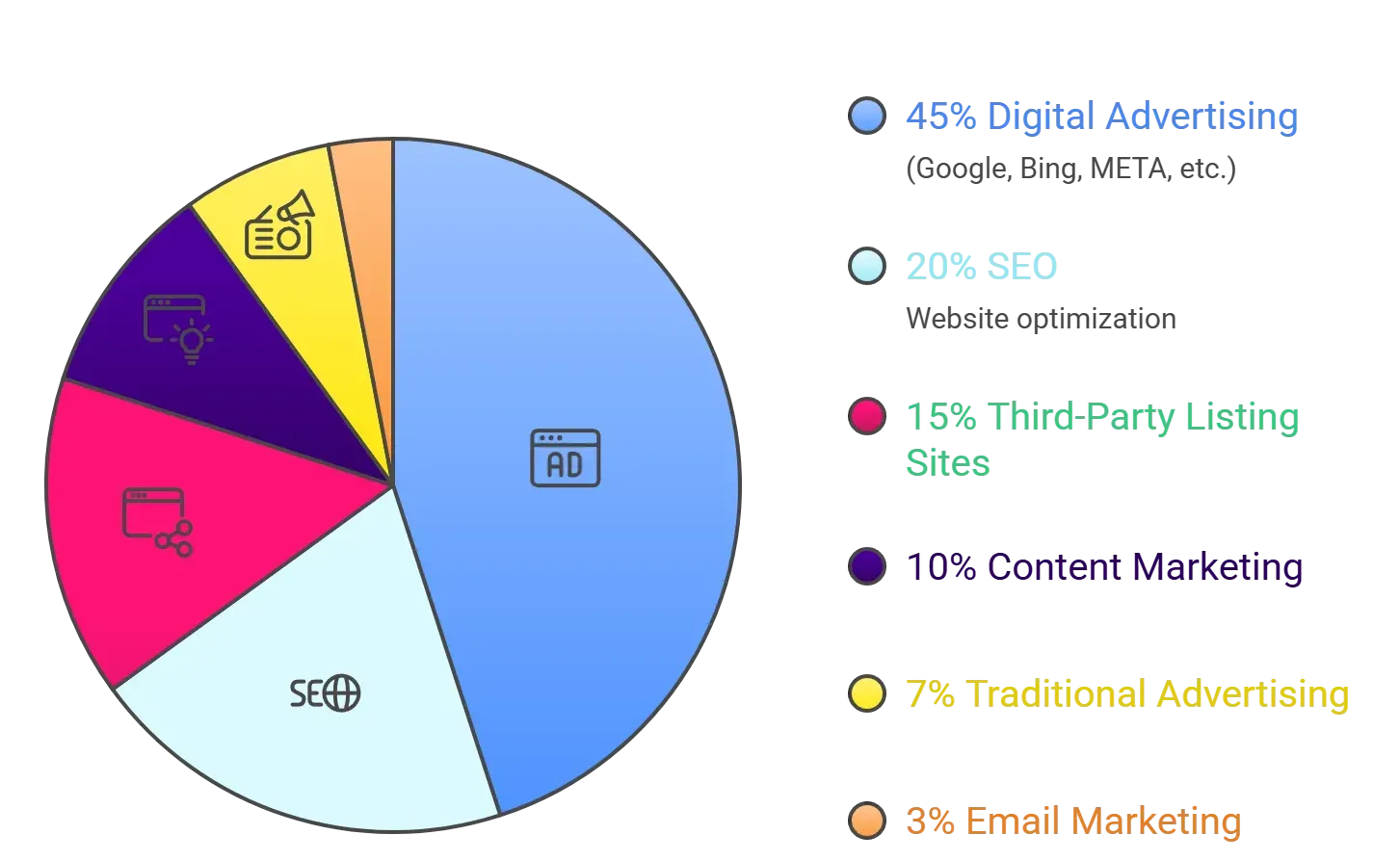
You can keep changing the mix as lead flow becomes more consistent and long-term channels start contributing more work.
Budget change can also be seasonal. Many shops increase their spending before spring detailing season or busier tint periods to build a better demand ahead of time rather than reacting after schedules start slowing down.
Build Your Content and Asset Library
Most of the time, you already have access to content. You can take customer delivery photos, PPF installation videos, before-and-after shots, and service footage. Then use them on service pages, landing pages, ads, and social posts.
A strong website usually ties it all together, which is why many shops also look into detailing website design services to make that experience easier to manage.
Track, Measure, and Adjust
This part is very important. Where you’ve put your money and expect more returns might not bring many customers.
Once you start tracking and measuring, you begin to see where leads are coming from, what channels are showing up, and where you need to hold your budget. Using tools like Google Analytics, Search Console, and call tracking to make those patterns easier to spot.
A quick monthly review can catch changes in lead flow, while quarterly reviews help identify what is still bringing in booked work.
If you’re ready for a stronger lead system, you can explore our SEO services for detailing businesses.
When to Stop Guessing and Get a Real Marketing Plan
A lot of shops handle marketing themselves in the beginning. That may work as a startup, but after a while, a point comes where the same effort stops creating the same results.
Here are a few signs you need to look for:
- Growth has stalled: Leads, booked jobs, and revenue start looking the same month after month, even when you’re spending your time and money on marketing.
- Marketing is taking up too much time: Tasks like website edits, follow-ups, content, and campaign updates are slowly turning into another full-time job outside of your actual job.
- The technical side keeps growing: Regular SEO updates, tracking tools, landing pages, automations, and reporting start stacking up quickly.
- SEO still is not producing results: Months go by, and rankings, local visibility, and search traffic still look the same.
That is usually when taking help from experts starts to make more sense.
At Detailers Roadmap, we offer detailing, PPF, ceramic coating, and tinting services. Our focus has always been on helping shops bring more qualified leads and booked work. That is why we offer services like website design, SEO, and RPM follow-up, which are designed around how these businesses operate.
If things have started feeling harder than they should, start a consultation and let’s figure out what works best for your shop.
Frequently Asked Questions (FAQs)
The questions below cover practical concerns auto business owners ask outside the main strategy areas, focused on budget, time, measurement, and ROI:
How Much Should an Auto Business Spend on Marketing?
Auto repair shops often start around 5–10% of annual revenue for marketing, while shops pushing for growth sometimes go a little heavier with 6–8%.
Where the money goes usually changes over time, too. Early on, shops put more into lead generation just to keep schedules full. As search visibility, referrals, and repeat customers start bringing in work, the budget mix often shifts as well.
How Long Does Automotive Marketing Take to Show Results?
The answer usually depends on where the leads are coming from. Paid ads can start bringing in leads quickly, social content often takes a month or two to build momentum, while SEO usually takes three to six months.
SEO, content, reviews, and local visibility often take longer because the impact builds month by month instead of all at once.
What Marketing Metrics Should an Auto Shop Track?
We’ve covered a lot of the core numbers, like lead volume, booking rate, and customer value, in the sections above. Once those are in place, you need to start paying attention to:
- Website conversion rate: How many visitors actually turn into calls, forms, or quote requests.
- Search visibility: Whether more people are finding your shop through Google over time.
- Review velocity: How often new reviews come in.
- Lead source trends: Which channels keep bringing in booked work month after month.
Do Detailing Shops Need Different Marketing Strategies Than Dealerships?
Yes. Dealerships are often focused on moving their inventory and getting a constant flow of buyers, while detailing shops spend more time building trust around services like ceramic coating or PPF.
Local SEO and reviews still matter for both because people usually compare options before reaching out.
What ROI Should an Auto Shop Expect From Marketing?
ROI usually looks different across channels. Paid ads can produce faster returns, SEO often builds over time, and referrals are often some of the highest-return lead sources for local shops.
Customer lifetime value matters too. One ceramic coating or PPF customer can turn into repeat work and future referrals, which changes the value of that first lead.
Conclusion
Automotive marketing usually looks different from one shop to the next. A shop trying to fill open spots on the schedule often has different priorities than a shop focused on larger-ticket services.
The starting point is figuring out what growth actually looks like for the business, then building goals, channels, and tracking around it.
If marketing has started taking up too much time or growth has slowed down, we can help. At Detailers Roadmap, we build marketing systems specifically for detailing, PPF, ceramic coating, and tint shops through high-converting websites, SEO, and follow-up systems designed around lead generation.
Book a consultation to get a clearer picture of the next steps.